Competition · 2026
ReRoot: Modular Cropping System for Resilient Agriculture
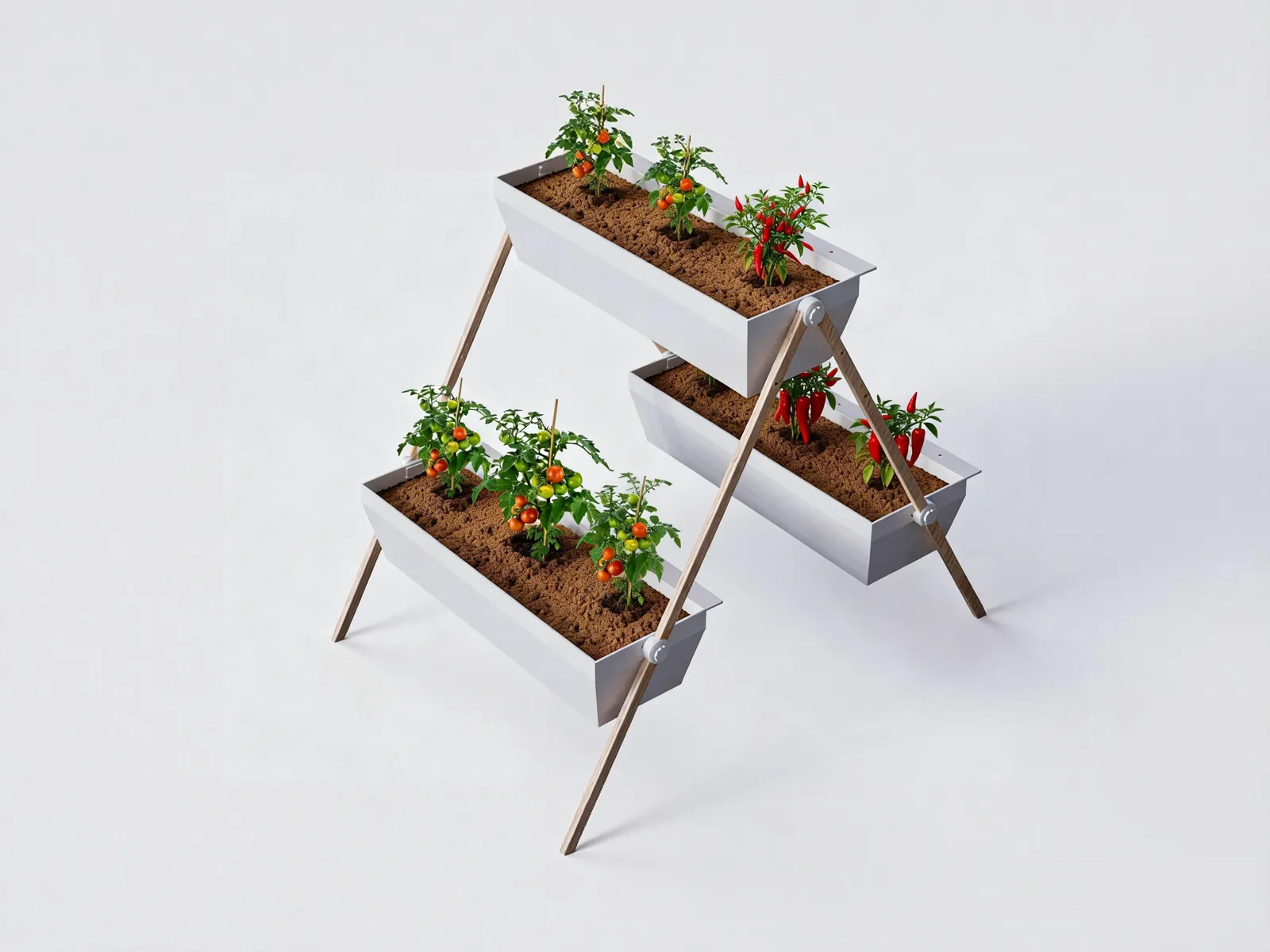
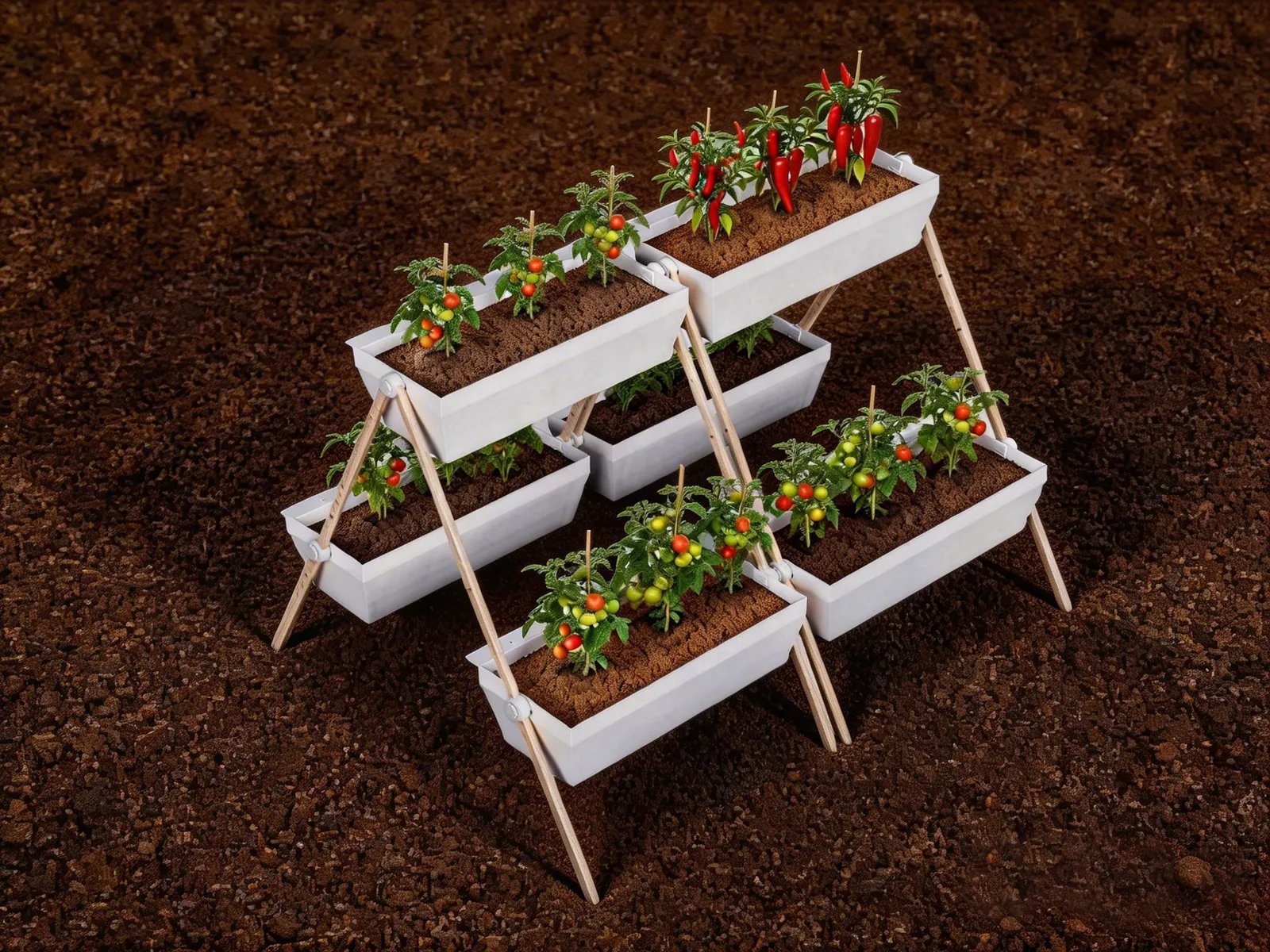
An affordable, modular vertical cropping system for small-scale organic farmers and urban growers. Crates on A-frames, made from recycled farm waste, fit irregular plots and cut down on bending and squatting.
Zhanming Chen and Risheng Liang
Summary
- Role
- Project manager and designer Features, descriptions, initial sketches
- Context
- MUSE Design Awards 2026 Design competition, Conceptual Design
- Format
- Conceptual design: modular vertical cropping system
- Designed for
- Small-scale organic farmers and urban growers
- Recognition
- MUSE Design Awards · Silver ×2 (2026)
Description
ReRoot is a modular vertical cropping system designed to empower small-scale organic farmers and urban growers. While these growers are essential to local food security and urban biodiversity, they are frequently marginalized by an agricultural industry focused on large-scale, high-cost automation. ReRoot addresses this issue by proposing an affordable, customized solution tailored to the realities of small-scale farming: limited land, diverse crop varieties, and the need for sustainable practices.
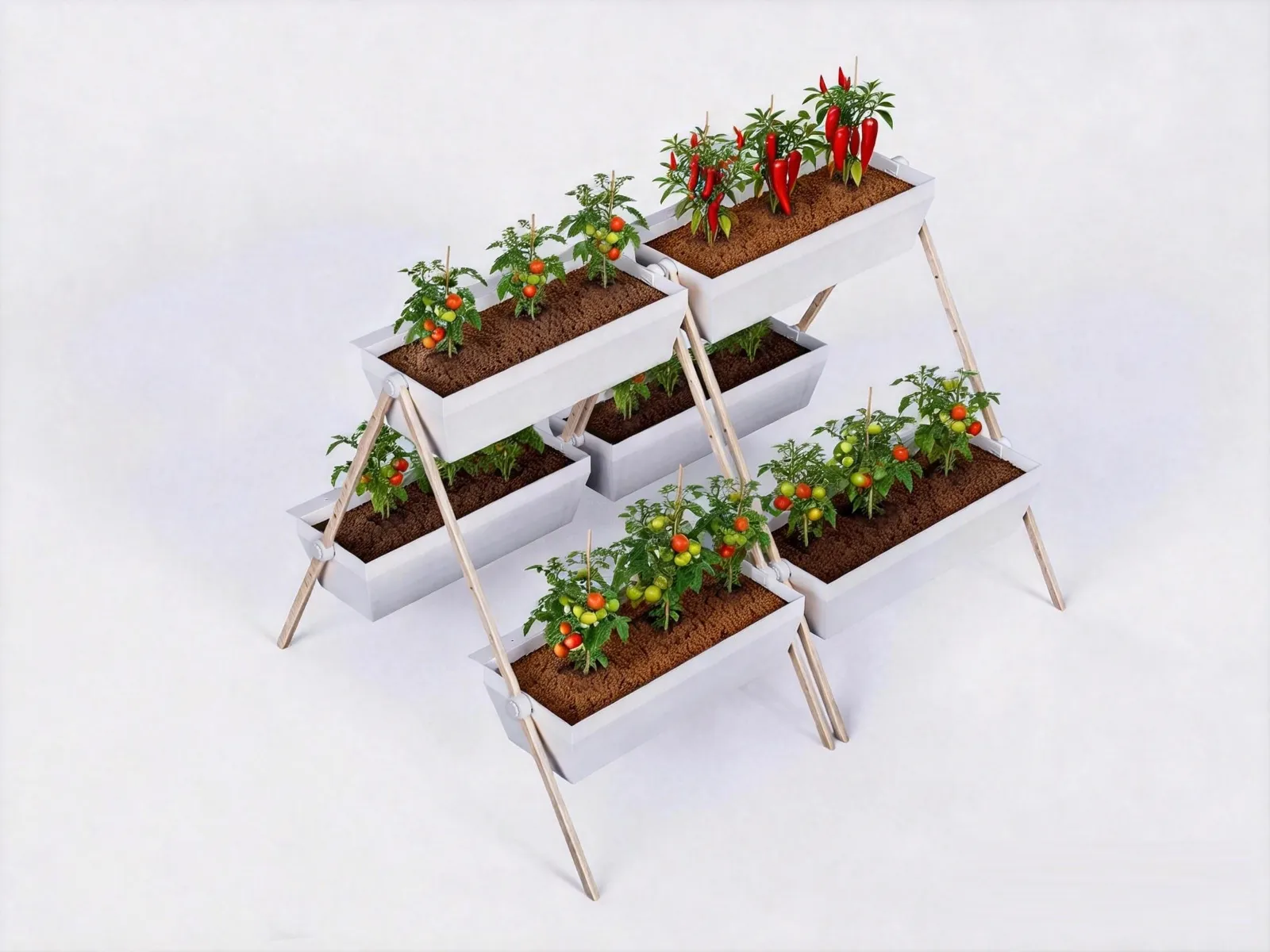
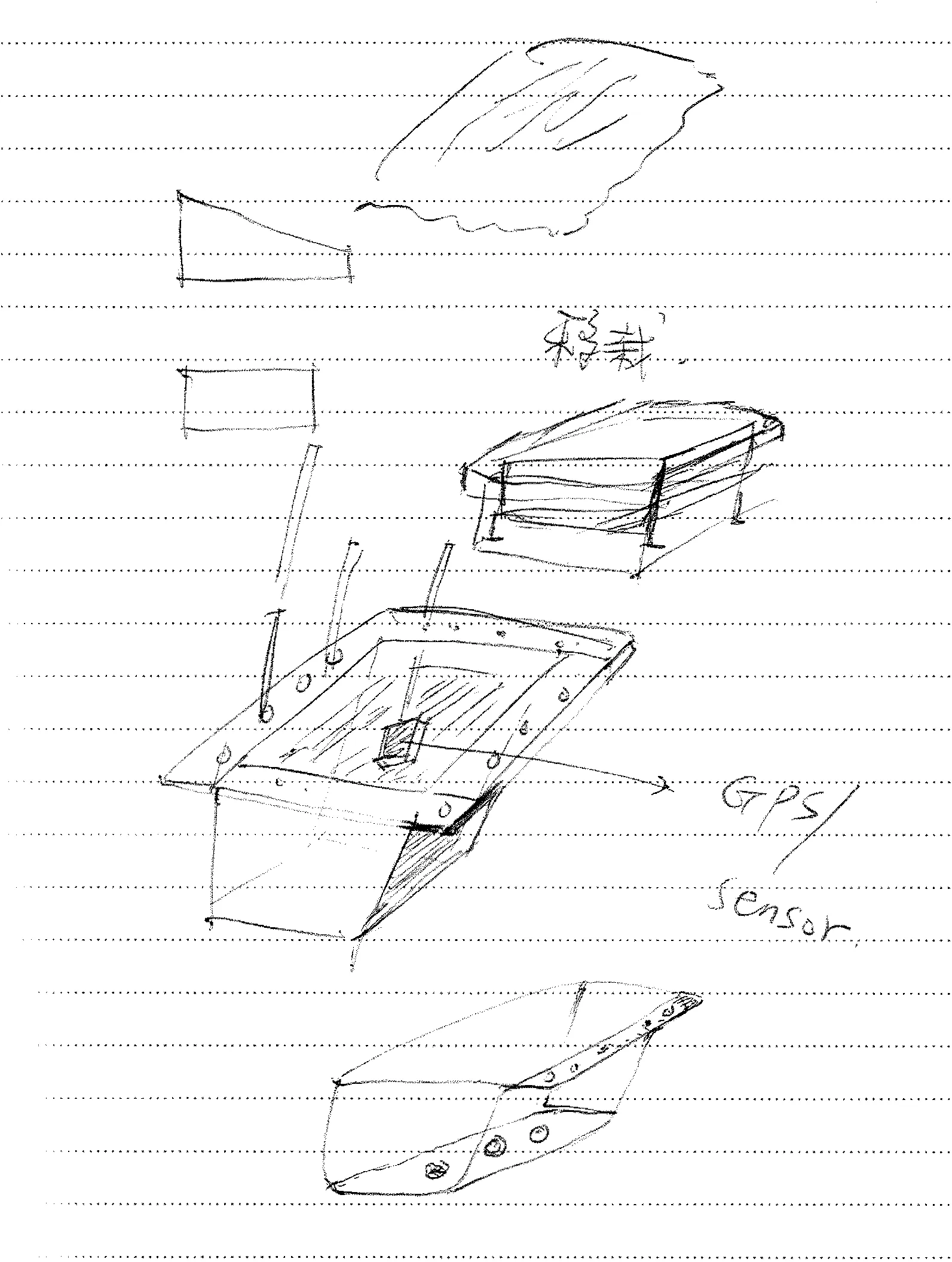
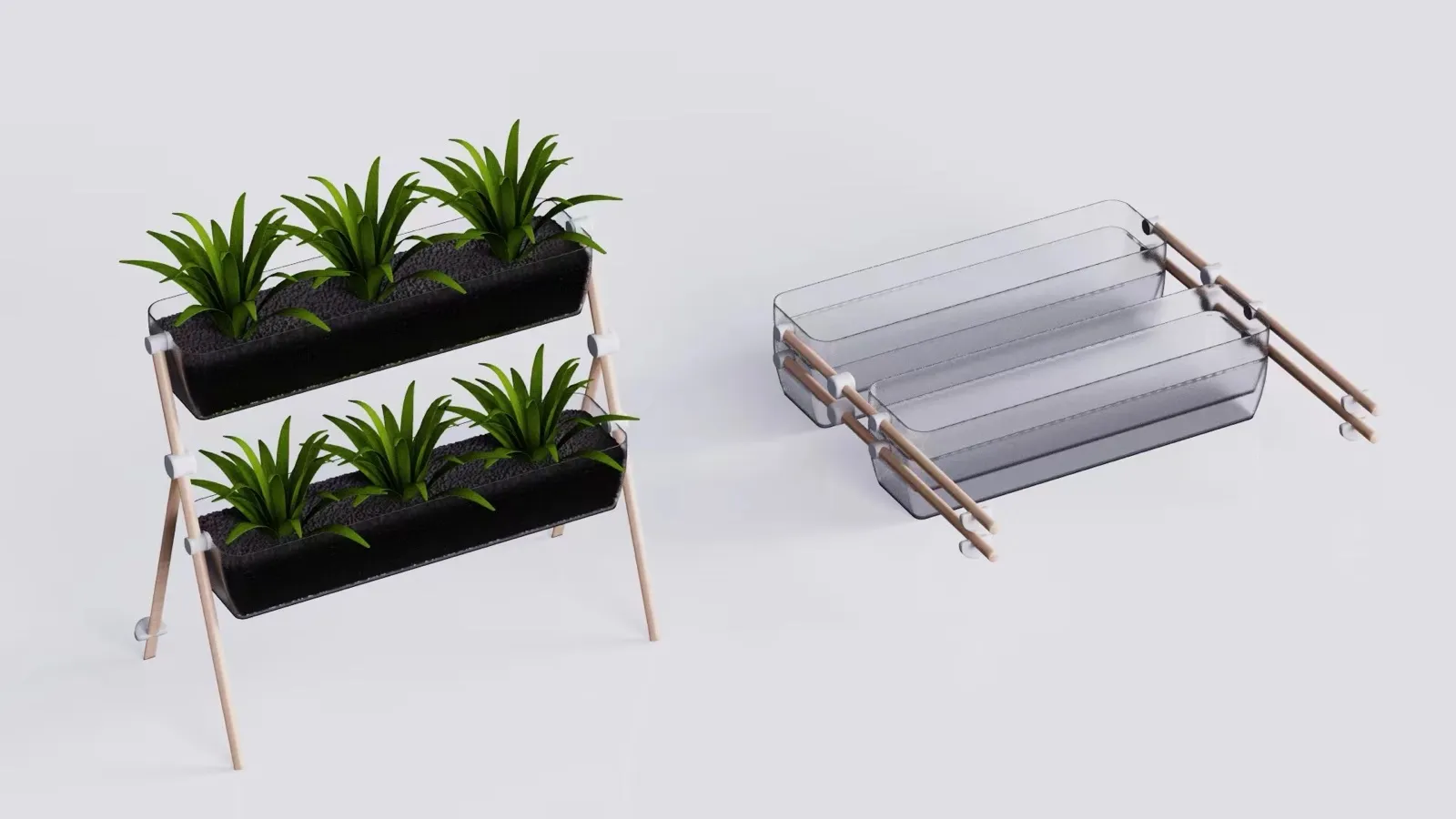
The system mitigates limited land access by using irregular or fallow plots that are difficult to farm or unusable by traditional methods. ReRoot’s architecture consists of crates supported by A-frames. This vertical approach improves land-use efficiency, and the modular design allows farmers to scale the system laterally to fit any space. Each crate has a slanted shape to maximize light penetration and water flow to all tiers. Its ergonomic design improves crate mobility and stackability, making it easier to transplant crops early in the growing season and relocate them during severe weather.
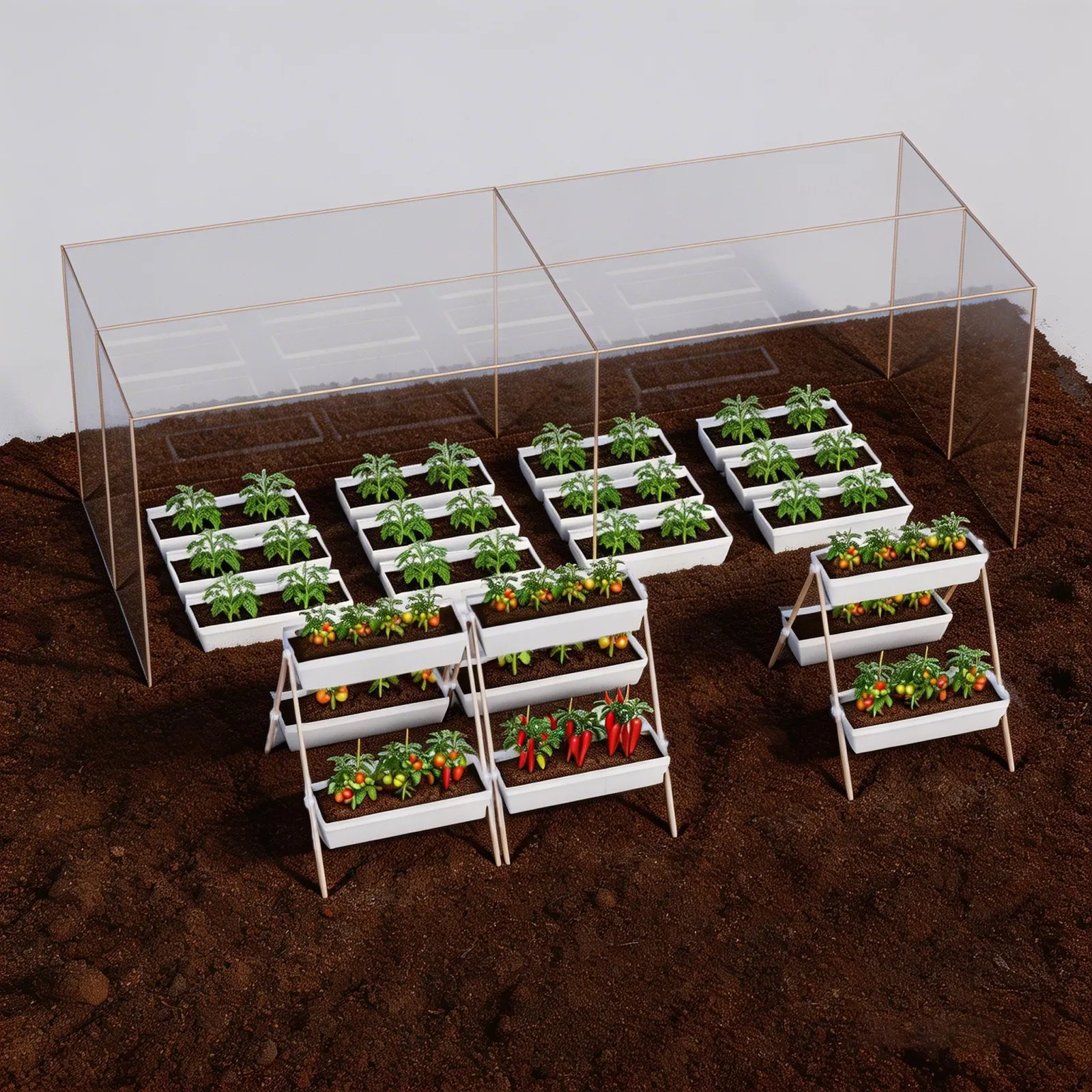
ReRoot is designed for polyculture farming. Its crates include integrated anchor sockets that hold vertical stakes and trellises, supporting vining crops like tomatoes, beans, and cucumbers. This allows small-scale farmers to use vertical space efficiently for high-value crops without additional infrastructure. The system helps farmers diversify their crops, support dietary variety, and enhance the well-being of local communities.
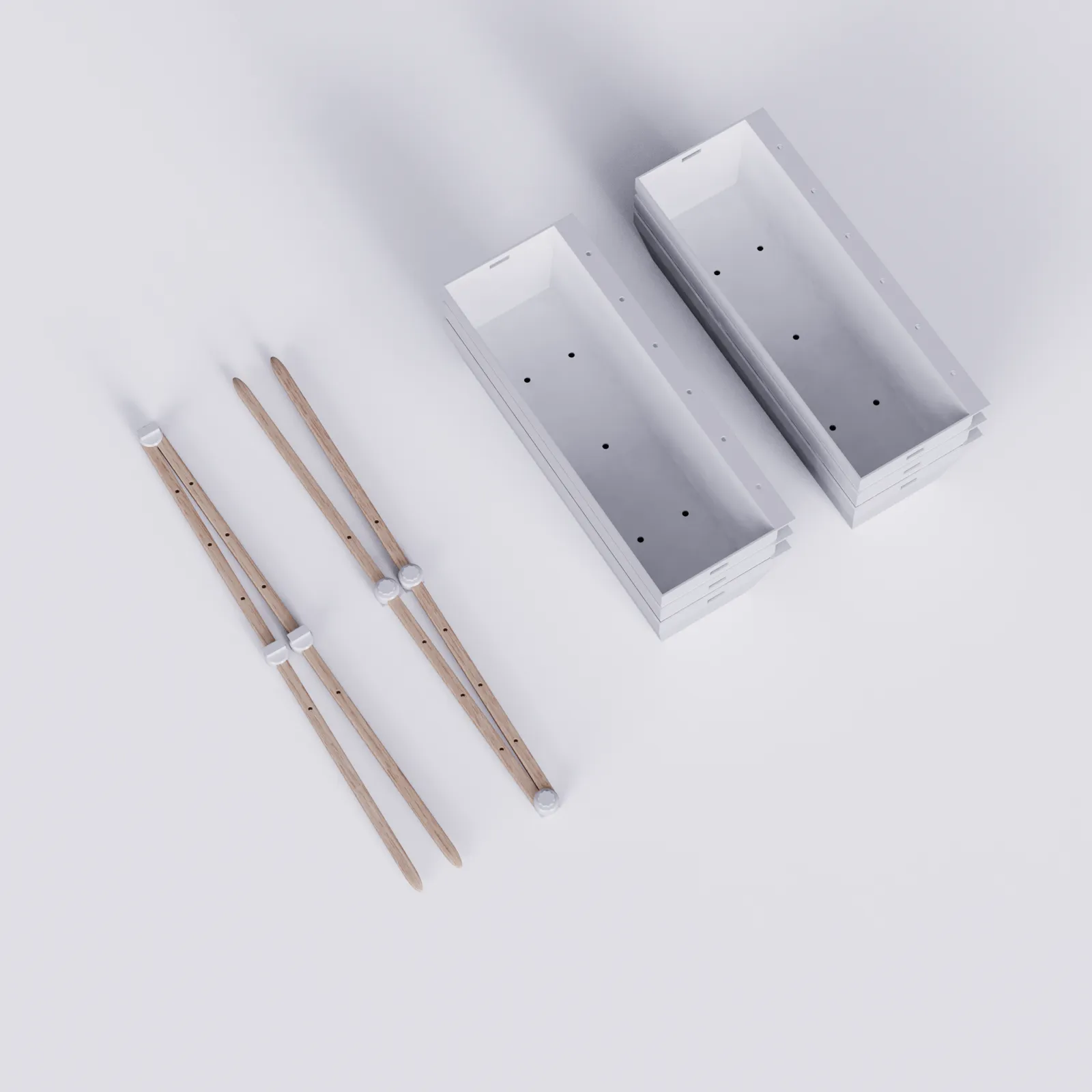
ReRoot’s materiality centers on sustainability. The structure is built from recycled farm waste, such as discarded pallets, timber offcuts, and other eco-friendly materials. By using propane torch carbonization and natural neem oil covers for weatherproofing and pest resistance, the design ensures a low-cost, non-toxic, circular lifecycle that aligns with organic farming values.
Additionally, ReRoot advocates for Design Justice. It improves farmers’ physical well-being by reducing the need to frequently bend and squat. It also offers a pathway to economic stability by increasing yields in constrained spaces. It enhances the resilience of local food systems and supports communities that have historically been overlooked by advanced technology and design. ReRoot is not only a planting tool but also a catalyst for systemic change, promoting a more inclusive and sustainable agricultural future.
Summary
- Role
- Project manager and designer Features, descriptions, initial sketches
- Context
- MUSE Design Awards 2026 Design competition, Conceptual Design
- Format
- Conceptual design: modular vertical cropping system
- Designed for
- Small-scale organic farmers and urban growers
- Recognition
- MUSE Design Awards · Silver ×2 (2026)
Sketches and Drafts
Colophon
- Credits
-
- Zhanming Chen
- Risheng Liang
- Date
- March 2026
- Methods
-
- Design Justice
- Materials
-
- Recycled farm waste (discarded pallets, timber offcuts)
- Propane torch carbonization
- Natural neem oil covers for weatherproofing and pest resistance
- Features
-
- Crates on A-frames
- Slanted crates for light and water
- Anchor sockets for stakes and trellises
- Stackable, movable crates
- Scales sideways to fit any plot
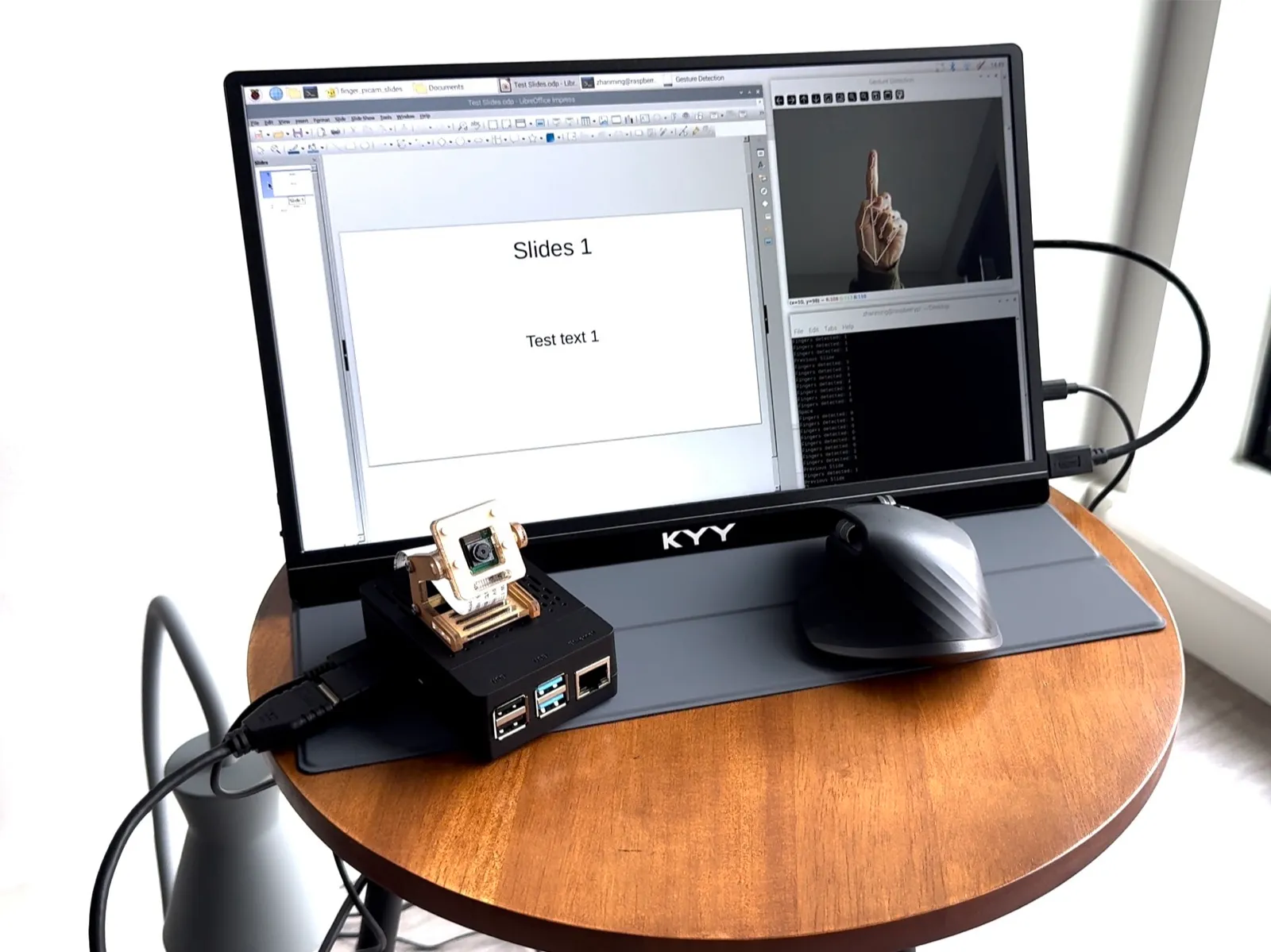 Next project, number 2 of 6: Gesture-based Presentation Remote A camera-based remote that lets instructors switch slides with a hand gesture, for the days the clicker gets left behind. Open project