Course · 2022
Zen Space | 禅 · 境
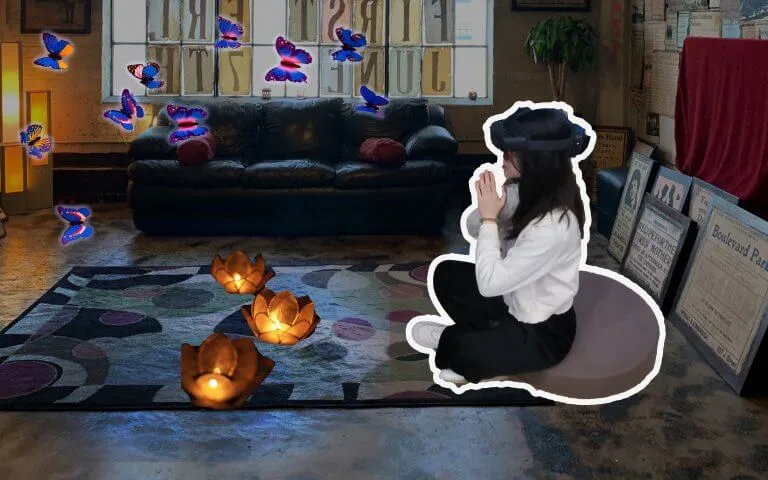
An at-home AR mindfulness app that eases stress through guided meditation, slow hand-gesture play and eye-focus exercises.
Zhanming Chen, Xinle Wang, and Ziru Luo
Summary
- Role
- Project manager and designer Features, AR interface UI, prototype evaluation
- Context
- Research on User Behavior and Human-Computer Interaction Graduate course, Sun Yat-sen University
- Format
- AR app on Microsoft HoloLens (mixed reality)
- Designed for
- College students during the pandemic
Demonstration Videos
Summary
- Role
- Project manager and designer Features, AR interface UI, prototype evaluation
- Context
- Research on User Behavior and Human-Computer Interaction Graduate course, Sun Yat-sen University
- Format
- AR app on Microsoft HoloLens (mixed reality)
- Designed for
- College students during the pandemic
Project Overview
As the final group project of the graduate-level course, Research on User Behavior and Human-Computer Interaction, at Sun Yat-sen University, we designed and developed Zen Space, an in-home mindfulness-based stress reduction AR application developed with Unity3D and C# language. The project is deployed on a Microsoft HoloLens device, which is a mixed-reality (MR) holographic computer in the form of a head-mounted display.
In a preliminary experiment, we found that Zen Space significantly lowered users’ level of anxiety and improved their level of mindfulness through multimodal input (hand gestures, verbalization, and eye movements) and multi-sense feedback (vision and audio).
Feature 1: Auditory Meditation Guidance
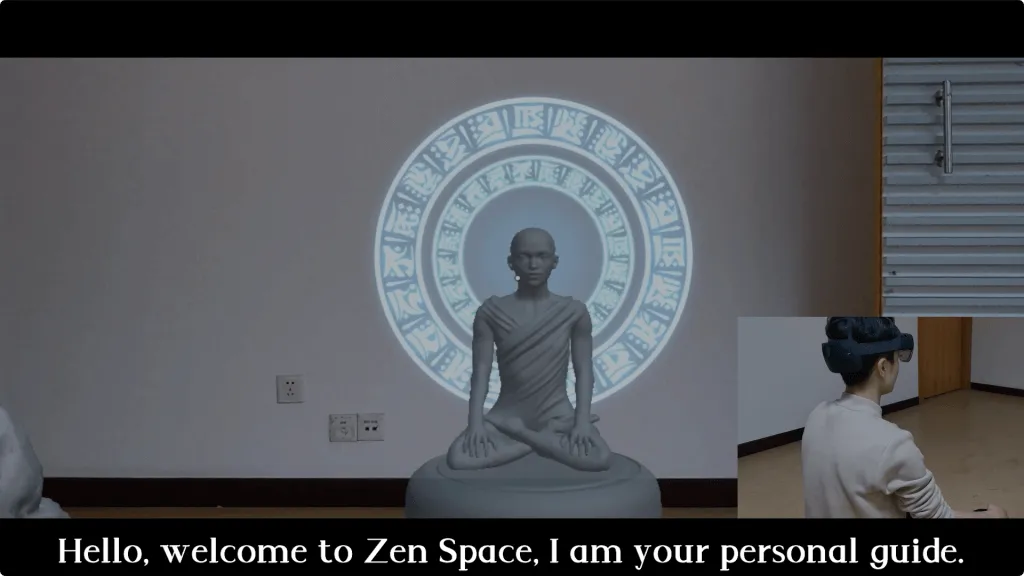
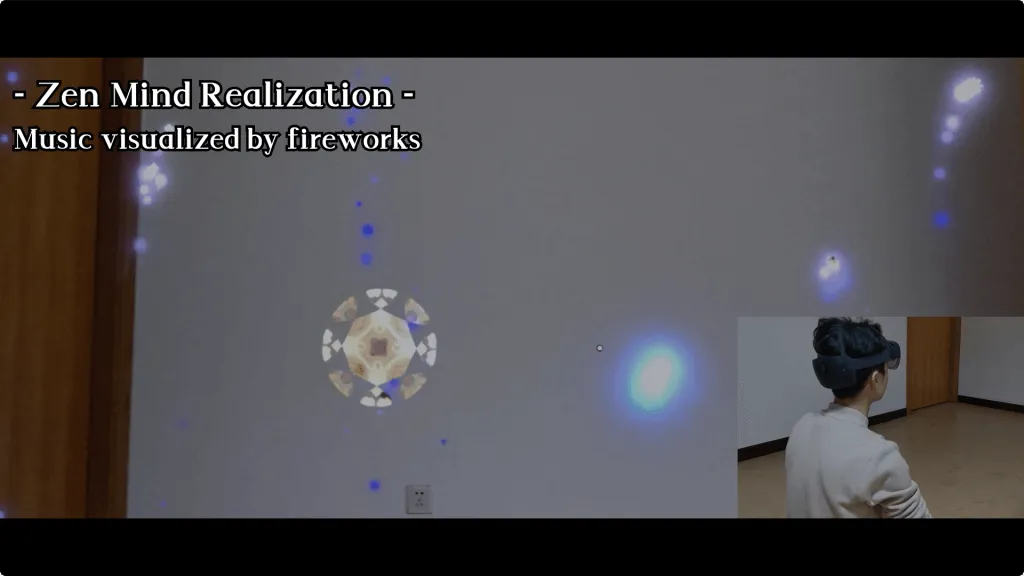
In these scenes, users practice respired mindfulness sessions (1) under the guidance of the virtual mentor, or (2) following the therapeutic music and visualized feedback.
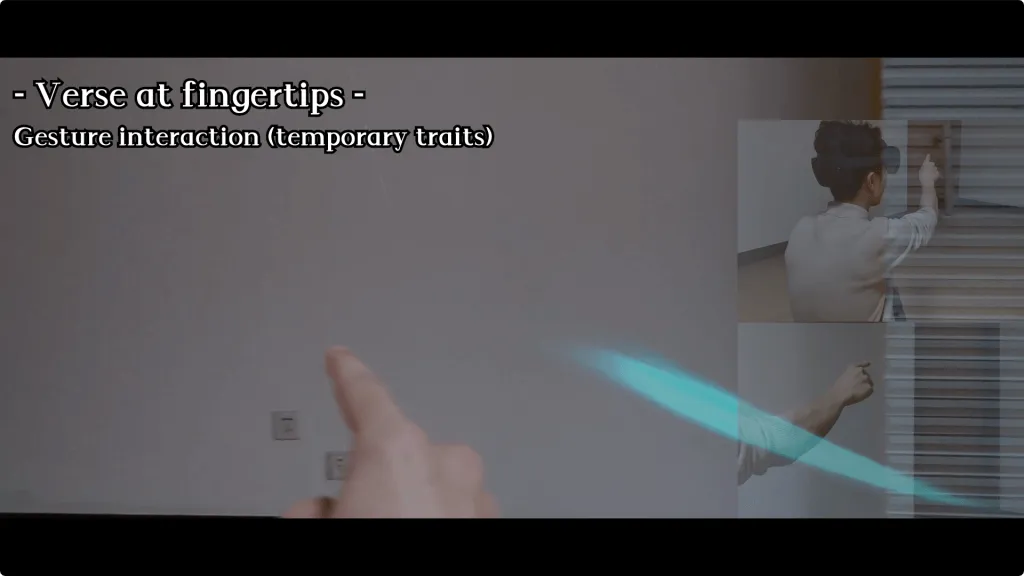
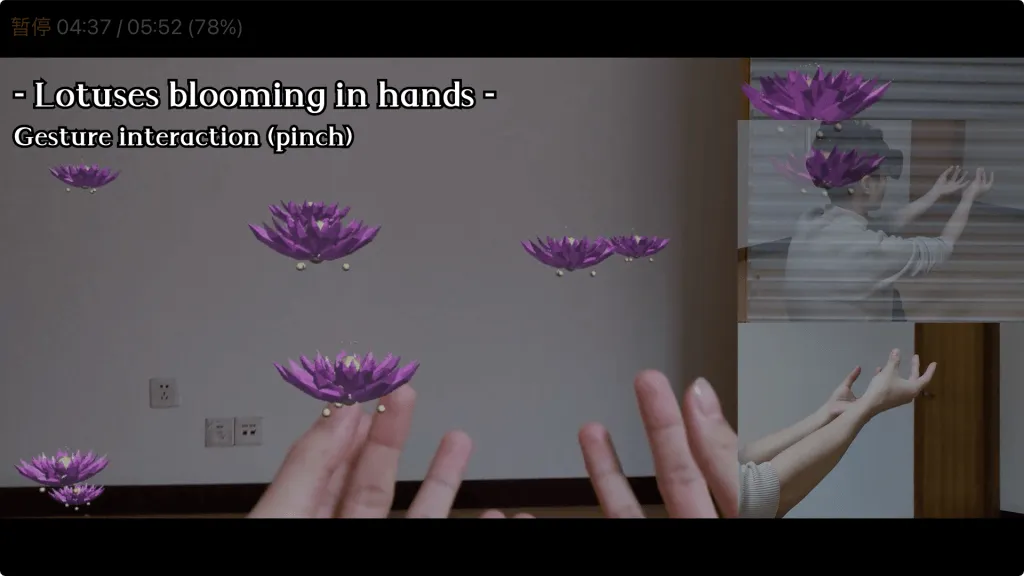
Feature 2: Gesture-based Meditation and Slow Interaction
In these scenes, users are encouraged to interact with hand gestures to: (1) draw patterns, or (2) pinch to generate lotus flowers. Such slow interaction releases the users from the sources of their anxiety and helps them regain the control of mind.
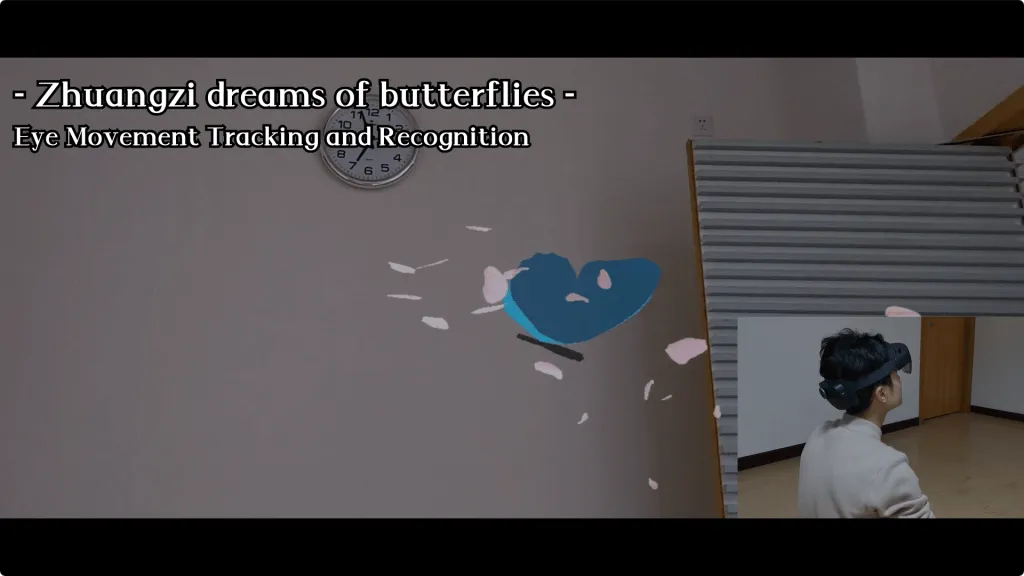
Feature 3: Eye Movement Recognition and Interaction
In this scene, users are encouraged to focus on the butterfly and receive feedback on falling petals. This session helps users boost concentration.
Pilot User Tests
We recruited 10 participants from the university for a pilot user test. We asked the participants to fill in a pre-test survey questionnaire, walk through the whole mindfulness training session, and then fill in a post-test survey questionnaire. Each experiment session was conducted in a usability lab and lasted for about 40 minutes. Results show that “Zen Space” is effective in increasing participants’ perceived level of mindfulness and decreasing the level of anxiety.
Colophon
- Credits
-
- Zhanming Chen
- Xinle Wang
- Ziru Luo
- Huiyue Wu (instructor)
- Date
- January 2022
- Methods
-
- Pilot user test, 10 participants
- Pre/post questionnaires
- Lab sessions of about 40 minutes
- Tools
-
- Unity3D
- C#
- Microsoft HoloLens
- Features
-
- Auditory meditation guidance
- Gesture-based meditation and slow interaction
- Eye-movement recognition and interaction
- Outcome
- Pilot test: higher perceived mindfulness, lower anxiety
 Next project, number 6 of 6: BibTalk | 毕毕叨叨 A mobile app prototype that helps college students in China keep track of job hunting spread across many platforms. Open project